


What is wind-assisted propulsion in the maritime sector?
Wind-assisted propulsion, the task of retrofitting “sails/rotors” to ships can bring with it many benefits, such as less fuel consumption, costs, and reduced CO2 emissions. In addition, vessels can potentially increase their ship speed for the same engine power.
Wind-assisted propulsion technologies can potentially offer double-digit fuel savings and do not require specialist crew competencies or additional crew numbers. Due to these factors, the business case for retrofitting vessels with wind-assisted propulsion energy-saving devices is currently being explored and implemented by many industry stakeholders.
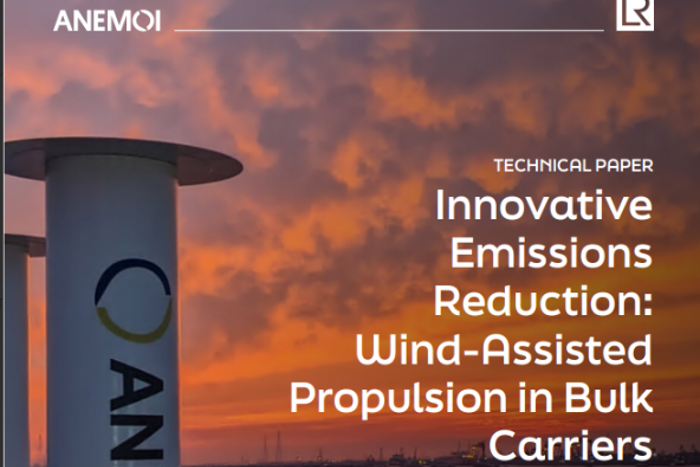
Wind-assisted propulsion retrofits such as suction sails, rotor sails (including Flettner rotors), rigid and kite sails offer a promising path for the shipping industry to move towards a more sustainable future. The technology is maturing, and with the right market conditions and regulatory support, it has the potential to become a widespread solution for reducing the environmental impact of maritime transport.
Latest content, downloads and tools



Video content
-
Rotor sail
-
Suction sail

LR and Anemoi collaboration and experience in emissions reduction through Wind-Assisted Propulsion
This video documents the innovative collaboration between Lloyd’s Register and Anemoi in achieving success in operational excellence and emissions reduction for shipping clients through Wind-Assisted Propulsion Solutions with rotor sails.
- Rob Tustin - North Asia new construction manager, Lloyd's Register
- Stephanie Ryder - Engineering design manager, Anemoi Marine Technologies
Video showcasing suction sail wind-assisted propulsion solutions and projects for ships in collaboration with Bound4Blue.
Filmed at SMM Hamburg 2024
Featuring
- Santiago Suarez de la Fuente - Wind Propulsion Specialist, Lloyd's Register
- David Ferrer - CTO and Co-founder, Bound4Blue
- Jose Miguel Bermudez - CEO and Co-founder, Bound4Blue
LR and Anemoi collaboration and experience in emissions reduction through Wind-Assisted Propulsion
This video documents the innovative collaboration between Lloyd’s Register and Anemoi in achieving success in operational excellence and emissions reduction for shipping clients through Wind-Assisted Propulsion Solutions with rotor sails.
- Rob Tustin - North Asia new construction manager, Lloyd's Register
- Stephanie Ryder - Engineering design manager, Anemoi Marine Technologies
Video showcasing suction sail wind-assisted propulsion solutions and projects for ships in collaboration with Bound4Blue.
Filmed at SMM Hamburg 2024
Featuring
- Santiago Suarez de la Fuente - Wind Propulsion Specialist, Lloyd's Register
- David Ferrer - CTO and Co-founder, Bound4Blue
- Jose Miguel Bermudez - CEO and Co-founder, Bound4Blue
Wind-Assisted Propulsion Systems (WAP) FAQs
Wind-powered ships operate by capturing the kinetic energy of the wind using sails or modern wind-assist technologies such as rotor sails, suction wings, kite or rigid sails. These systems convert wind energy into thrust, which propels the ship forward. The wind acts as a supplementary source of propulsion, depending on the ship's design. This method can reduce the fuel-consumption of the engine, making the ship more environmentally friendly and cost-efficient over long distances.
Wind-assisted propulsion can play a significant role in reducing emissions. By harnessing wind energy, ships can reduce their reliance on fossil fuels, leading to lower carbon dioxide and greenhouse gas emissions. This is particularly beneficial for long-haul voyages where fuel consumption is high. Wind-assisted systems can also help shipping companies meet international environmental regulations and sustainability goals.
Wind-assisted propulsion works by using devices such as rotor sails, suction sails, kites, or rigid sails to capture wind energy and convert it into thrust. These systems are often automated and can adjust their orientation to optimise wind capture based on real-time weather conditions. The additional thrust provided by wind reduces the load on the ship’s engines, thereby decreasing fuel consumption and emissions while maintaining operational speed and efficiency.
New wind-propelled ships use advanced technologies like automated rigid sails, suction wings, kite sails or Flettner rotors to harness wind energy. These systems are often integrated with digital control systems that adjust the sails or rotors in real time to optimise performance. The goal is to reduce fuel consumption and emissions while maintaining or improving voyage efficiency.
When wind propels boats or ships, it creates aerodynamic lift on the sails or other wind-catching devices. This lift generates a forward force that moves the boat through the water. The direction and strength of the wind, along with the design of the sails and hull, determine how efficiently the boat can travel. Skilled navigation and sail adjustment are essential to harness wind power effectively.
Although it is technically possible to install a wind turbine on a ship, it is more commonly used for generating auxiliary power rather than propulsion. Wind turbines can provide electricity for onboard systems, reducing the load on diesel generators. However, due to space, stability, and efficiency concerns, they are not typically used as the primary means of propulsion.
Wind power on ships offers several advantages. It can significantly reduce fuel consumption and greenhouse gas emissions, making it an environmentally friendly option. It can also lower operating costs over time and help ships comply with international environmental regulations. Additionally, wind-assisted systems can extend the range of vessels and reduce dependence on fossil fuels.


